Frankfurt am Main is one of Europe’s most important financial hubs — and one of Germany’s most practical cities for expats who want career stability, strong salaries, and international corporate life. It’s not as “famous” as Berlin, and it doesn’t sell itself as a creative capital like Hamburg or Cologne. But if your goal is to build a serious career in banking, finance, risk, compliance, or corporate tech, Frankfurt is often the most efficient choice.
This guide is written for expats who want the real picture: where the finance jobs are, what salaries look like in practice (gross vs net), how cost of living and housing behave, what the lifestyle is actually like after 6 months, and what hidden downsides you should plan for. You’ll also get short German sentences you will genuinely use — with phonetic reading right next to them — so you can handle landlord calls, HR conversations, and office moments confidently.
At a glance: why Frankfurt works for many expats
- Finance gravity: banks, ECB ecosystem, global financial services, risk/compliance, fintech.
- Strong salaries: often higher than Berlin, competitive nationally for corporate roles.
- International work: many teams operate in English, especially in finance and corporate tech.
- Commuter-friendly: you can live outside the city and still commute efficiently.
- Lifestyle trade-off: less “scene” than Berlin, more stability and structure.
1) The Frankfurt job market for expats: what’s actually here
Frankfurt’s economy is shaped by finance — but not only finance. The city is a cluster of corporate headquarters, professional services firms, IT and security functions that support regulated industries, and a massive international airport logistics ecosystem. For expats, the key question is not “Are there jobs?” It’s “Which ecosystem matches my profile and language level?”
Core finance & banking employers (the “gravity”)
Frankfurt hosts major German banks, international investment banks, asset managers, and a wide professional services layer around them. Many of these organizations hire internationally — especially for specialized skills.
- Banking & capital markets: trading support, operations, finance, treasury, quant, market risk.
- Risk & compliance: operational risk, model risk, regulatory reporting, AML/KYC, controls.
- Audit & advisory: consulting, risk advisory, financial audit, forensic work.
- Corporate tech: cloud, data engineering, cybersecurity, platform roles in regulated environments.
Fintech & financial infrastructure
Frankfurt’s fintech scene is smaller than Berlin’s startup ecosystem, but it’s often more closely connected to real financial infrastructure and regulated clients. That can mean more stability — and more compliance.
Non-finance sectors expats still use
- Airport & logistics: operations, supply chain, IT, security.
- Pharma/chemicals and B2B: regional HQ functions, finance ops, procurement analytics.
- Research & universities: some international hiring, but more German in administration.
Frankfurt ist international, aber sehr business-orientiert.
(FRANGK-foort ist in-ter-na-tsyo-NAL, AH-ber zair BIZ-nes oh-ree-en-TEERT.)
English meaning: Frankfurt is international, but very business-oriented.
2) Finance jobs in Frankfurt: where expats fit best
“Finance jobs” in Frankfurt can mean many different things. For expats, the easiest entry points are usually roles where:
- English is already standard in documentation and reporting,
- the skill set is specialized (risk, compliance, tech, analytics),
- the employer has international HR and visa experience.
Roles where English often works (depending on team)
- Risk & controls: operational risk, model risk, credit risk analytics.
- Regulatory functions: reporting, governance, internal controls in global firms.
- Finance operations: reporting, FP&A in international HQ functions.
- Financial technology: data engineering, cloud, security, platform roles.
Roles where German becomes important faster
- Client-facing work in the German market.
- Retail banking and many local customer roles.
- Legal-heavy compliance tasks in German frameworks (company dependent).
- Some HR/people roles inside German corporates.
The practical takeaway: you can start in English in Frankfurt — but if you want broader opportunity and long-term progression, German becomes a leverage skill.
Deutsch ist in Frankfurt oft ein Vorteil, nicht immer ein Muss.
(doitch ist in FRANGK-foort oft ine fayr-TILE, nikht IM-er ine moos.)
English meaning: In Frankfurt, German is often an advantage, not always a must.
3) Salaries in Frankfurt: what to expect and how it feels in real life
Frankfurt salaries are often strong — especially in regulated industries and corporate roles. But, as in all of Germany, your daily life runs on Netto (net), not Brutto (gross). Finance expats sometimes feel surprised by the net difference because the gross number looks high.
Brutto ist nicht gleich netto.
(BROO-toh ist nikht glaykh NEH-toh.)
English meaning: Gross is not the same as net.
Typical salary patterns (very rough orientation)
These ranges depend heavily on seniority, employer type, and whether you’re in a front-office, middle-office, or support function:
- Entry-level finance/ops roles: €40k–€60k gross/year.
- Mid-level specialist (risk, compliance, analytics): €60k–€95k gross/year.
- Senior specialist / lead roles: €90k–€130k+ gross/year.
- Top-tier front-office or highly specialized roles: can go higher depending on bonus structures.
Bonuses matter more in Frankfurt than in many German cities. But bonus culture depends heavily on the employer and the exact function. Don’t assume you’ll automatically get “London-style” bonus behavior; ask clearly.
Wie ist die Bonusstruktur genau?
(vee ist dee BOH-noos-shtrook-TOOR geh-NOW?)
English meaning: What exactly is the bonus structure?
Why Frankfurt can feel “comfortable” faster than Berlin
- Higher typical salaries in many corporate roles.
- Commuting options let you reduce rent by living outside the city.
- More corporate housing logic in some neighborhoods (still competitive, but less “startup chaos”).
But don’t underestimate housing: Frankfurt is not cheap. The difference is that you can often “solve” housing with commuting strategy more easily than in some other cities.
4) Cost of living: rent, commuting, and why location matters
Frankfurt’s cost of living is driven by housing and commuting patterns. The city center and popular neighborhoods can be expensive, but the metro region gives you flexibility: many professionals live in nearby towns and commute.
Housing reality
- Frankfurt city: higher rent in central zones; convenient lifestyle; smaller apartments at higher prices.
- Surrounding areas: often better value; calmer neighborhoods; commuting becomes your trade-off.
For expats, the first 3–6 months are often a “setup phase”: temporary housing, deposit (Kaution), documentation gathering, and learning how the local market works.
Ich kann alle Unterlagen sofort schicken.
(ikh kan AH-leh OON-ter-lah-gen soh-FORT SHI-ken.)
English meaning: I can send all documents immediately.
Commuting as a strategic advantage
Frankfurt’s region is dense and well-connected. If you are willing to commute, you can often get:
- more space for the same rent,
- better apartment availability,
- a calmer daily rhythm.
This is one reason families often choose the Frankfurt region: they can optimize housing without losing career access.
5) Lifestyle: what Frankfurt feels like after the honeymoon phase
Frankfurt is sometimes unfairly described as “boring.” The truth is more nuanced. Frankfurt is not a city that markets itself through scene culture. It’s a city that rewards people who value efficiency, stability, and an international professional environment.
What many expats like
- International atmosphere: you hear many languages, especially around finance and the airport.
- Practical city size: it’s easy to get across the city compared to mega-capitals.
- Career density: networking is more “professional” and less “scene-based.”
- Travel advantage: one of Europe’s strongest airports is right there.
What some expats struggle with
- Less “creative chaos” than Berlin — fewer subcultures visible in daily life.
- Work identity dominance: the city can feel career-centered.
- Integration barrier: deeper circles may require German sooner than expected.
Frankfurt ist kleiner als Berlin, aber sehr effizient.
(FRANGK-foort ist KLY-ner als ber-LEEN, AH-ber zair ef-fi-TSYENT.)
English meaning: Frankfurt is smaller than Berlin, but very efficient.
6) Work culture in Frankfurt finance: what surprises newcomers
Frankfurt’s finance culture is often more formal than Berlin startup culture. You’ll see stronger emphasis on:
- documentation and auditability,
- clear approval chains,
- risk language and controls,
- professional communication tone.
If you come from a more informal culture, you may need to adjust your communication style: shorter messages, clearer action items, and more written confirmation.
Können wir das bitte kurz dokumentieren?
(KERN-en veer das BIT-teh koorts doh-koo-men-TEE-ren?)
English meaning: Can we briefly document this, please?
Ich brauche das schriftlich, bitte.
(ikh BROW-khe das SHRIFT-likh, BIT-teh.)
English meaning: I need that in writing, please.
The “regulated mindset”
In regulated finance environments, many decisions are shaped by compliance requirements. This can feel slow — but it also creates stability and clear responsibility boundaries. The best way to thrive is to become fluent in “controls thinking”: what is the risk, what is the mitigation, what is the evidence?
7) German language expectations in Frankfurt: what level helps most
Frankfurt is international, but German increases your surface area: more roles, more internal influence, easier housing interactions, and smoother everyday administration.
For many expats, a practical target is B1 for daily life and B2 for career expansion. You don’t need perfect German. You need German that works in real situations.
Entschuldigung, ich lerne noch Deutsch.
(ent-SHOOL-di-goong, ikh LEHR-neh nokh doitch.)
English meaning: Sorry, I’m still learning German.
Mein Deutsch ist auf B2-Niveau.
(mine doitch ist owf B2 nee-VOH.)
English meaning: My German is at B2 level.
8) Practical German sentences you will use in Frankfurt (with phonetics)
These sentences show up constantly in Frankfurt expat life: HR calls, apartment searches, and finance office communication.
At work
Was ist der nächste Schritt?
(vas ist dare NEX-teh shrit?)
English meaning: What’s the next step?
Bis wann brauchen Sie das spätestens?
(bis van BROW-khen zee das SHPAY-tes-tens?)
English meaning: By when do you need this at the latest?
Ich prüfe das und melde mich bis morgen.
(ikh PRÜ-feh das oont MEL-deh mikh bis MOR-gen.)
English meaning: I’ll check it and get back to you by tomorrow.
With HR / admin
Welche Unterlagen muss ich einreichen?
(VEL-khe OON-ter-lah-gen moos ikh IN-rye-khen?)
English meaning: Which documents do I have to submit?
Wo finde ich meine Steuer-ID?
(voh FIN-deh ikh MY-neh SHTOY-er EE-DEE?)
English meaning: Where can I find my tax ID?
Haben Sie das Formular auch auf Englisch?
(HAH-ben zee das for-MOO-lar owkh owf ENG-lish?)
English meaning: Do you also have the form in English?
With landlords / housing
Wann wäre eine Besichtigung möglich?
(van VEH-reh EYE-neh beh-ZIKH-ti-goong MÖG-likh?)
English meaning: When would a viewing be possible?
Ich bin berufstätig und habe ein festes Einkommen.
(ikh bin beh-ROOFS-tay-tikh oont HAH-beh ine FES-tes EYE-n-koh-men.)
English meaning: I’m employed and have a stable income.
Ich kann eine SCHUFA-Auskunft schicken.
(ikh kan EYE-neh SHOO-fah OWS-koonft SHI-ken.)
English meaning: I can send a SCHUFA report.
9) Hidden downsides: what expats should plan for
Frankfurt can be an excellent career city — but it has trade-offs. These are the common “surprises”:
Downside 1: Housing is expensive and competitive
Even if the market is more “solvable” via commuting, good apartments are competitive. Newcomers still face the documentation expectations and the need to present stability clearly.
Downside 2: The city can feel career-centric
Some expats love the professional vibe. Others miss the cultural variety and scene density of larger creative capitals. Frankfurt has culture — it’s just less “loud” about it.
Downside 3: German becomes a ceiling earlier than expected
Because many roles are stakeholder-heavy and regulated, German can become a progression factor sooner than in English-first Berlin startups.
Downside 4: Formality and compliance can feel slow
If you’re used to fast, informal decision-making, finance governance can feel heavy. But it also creates clarity and stability.
Ich verstehe, aber ich brauche eine Lösung.
(ikh fer-SHTEH-heh, AH-ber ikh BROW-khe EE-neh LÖ-zoong.)
English meaning: I understand, but I need a solution.
10) Practical strategy: how to move to Frankfurt and win the first 90 days
If you want a realistic Frankfurt plan, use this 90-day approach:
Week 1–2: Stabilize basics
- Secure temporary housing with clear contract terms.
- Start your Anmeldung process as early as possible.
- Open a bank account and set up health insurance details.
Week 3–6: Build professional footing
- Align expectations with your manager in writing.
- Learn the internal compliance rhythm and documentation style.
- Make your “reliability signals” visible: follow-up emails, clear action items, calm delivery.
Week 7–12: Optimize for long-term stability
- Start apartment search for long-term housing with complete documents.
- Build a German routine: 15 minutes daily beats 2 hours once a week.
- Network professionally: Frankfurt rewards structured, career-focused networking.
Ich bin neu in Deutschland und möchte alles richtig machen.
(ikh bin noy in DOITCH-land oont MURKH-teh AH-les RIKH-tikh MAH-khen.)
English meaning: I’m new in Germany and want to do everything correctly.
Conclusion: is Frankfurt the right expat city for you?
Frankfurt is one of Germany’s strongest cities for expats who want finance and corporate careers, international work, and a practical lifestyle with strong commuting options. If you’re aiming for banking, risk, compliance, corporate tech, or professional services, Frankfurt often gives you a higher “career density” than other cities.
The trade-off is cultural: Frankfurt is less about subculture and more about professional life. If you like structure, stability, and international business, you’ll likely enjoy it. If you want maximum creative variety and a constant social scene, you might prefer Berlin — or you’ll need to build your social life more intentionally in Frankfurt.
Either way, the best expat experience comes from planning the entry phase: temporary housing, admin systems, and useful German. Do that, and Frankfurt becomes not just a work hub — but a comfortable long-term base.
Frankfurt kann ein sehr gutes Zuhause sein, wenn man es richtig plant.
(FRANGK-foort kan ine zair GOO-tes tsoo-HOW-zeh zine, ven man es RIKH-tikh plahnt.)
English meaning: Frankfurt can be a very good home if you plan it right.
Want more copy-ready German for work, housing, and admin? Open the German Learning Toolkit and keep it next to you while you build your Frankfurt life.
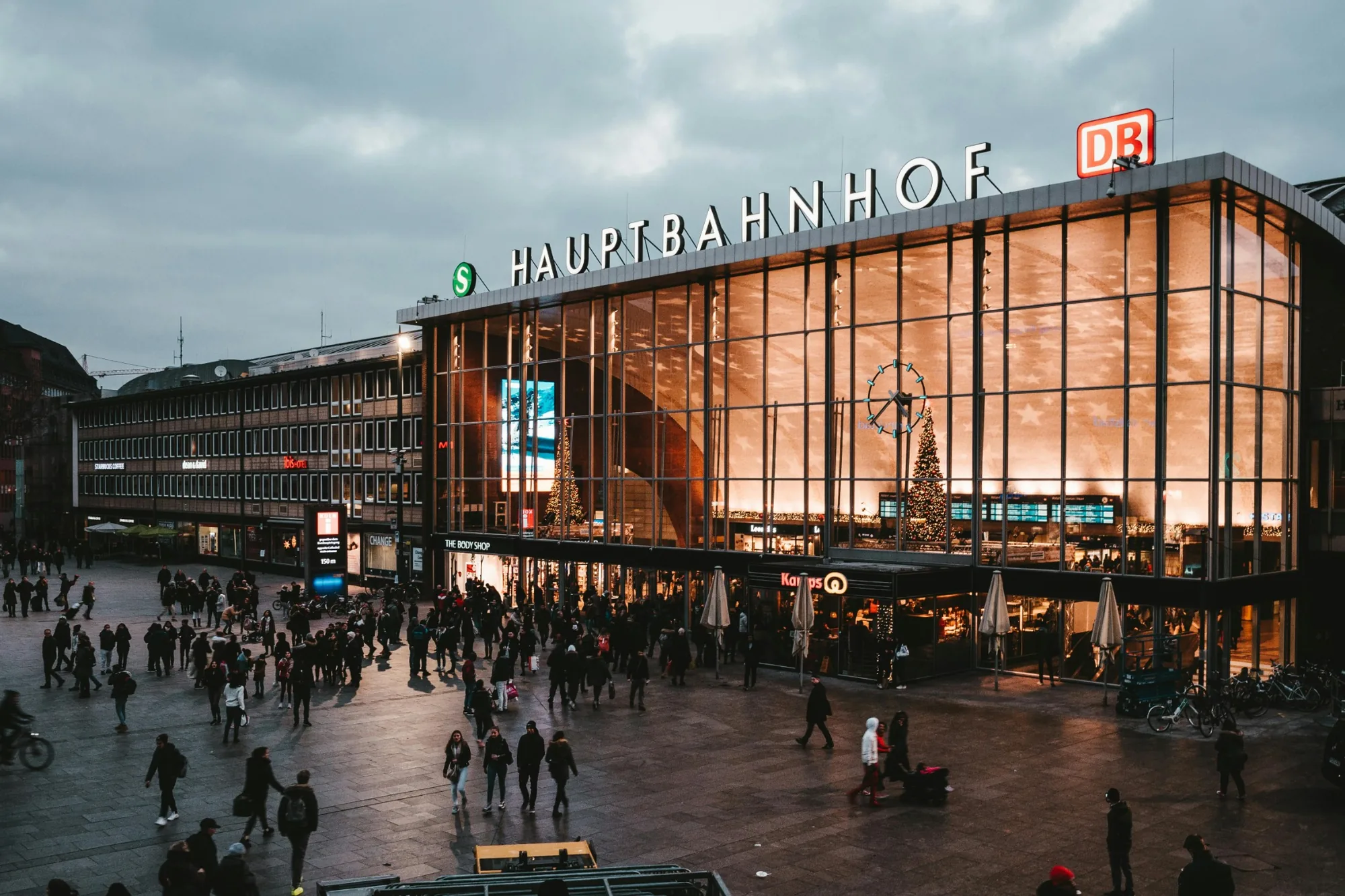 Frankfurt tip: in regulated workplaces, “written clarity” is a superpower. A short, clear follow-up email can save hours later.